Fire dampers are one of the most important life safety devices hidden within a building, yet they’re often overlooked. Installed inside ventilation ductwork, where it passes through fire-rated walls and floors, their job is to close automatically during a fire, serving to stop flames and smoke spreading between compartments.
| If you are unsure what fire dampers are or where they are fitted, our guide on fire dampers explained covers the basics in more detail. |
A question we’re often asked is:
Do fire dampers have an expiry date?
The short answer is no. Fire dampers don’t come with a fixed shelf life, but that doesn’t mean they’ll last forever.
Do Fire Dampers Need Replacing?
There is no UK legislation or British Standard that states a fire damper must be replaced after a certain number of years. Most manufacturers don’t specify a fixed lifespan either.
Instead, a fire damper should remain in service for as long as it continues to operate correctly and is in good condition.
How long that is depends on factors such as:
- The quality of the original installation
- The environment it operates in – therefore the level of exposure to dust, grease or corrosion ( i.e higher level of corrosion in a swimming pool area)
- Whether it has been regularly inspected and maintained
- Any alterations to the ductwork
A well-maintained fire damper could remain serviceable for many years, whilst another may need replacing much sooner, if faults are found.
If your fire dampers are in a high-dust or high-corrosion environment (such as a swimming pool, industrial area or coastal site), consider arranging inspections more frequently than the standard 12 months. This can help prevent build-up that might stop dampers from closing during a fire.
Why Regular Testing Is So Important
Unlike many building systems, fire dampers are designed to do very little during day-to-day operation. In fact, you hope they never have to close, because you hope there is never an emergency.
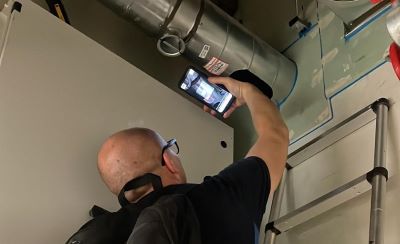
The problem is that because they’re hidden above ceilings or inside service risers, it’s easy to assume they’re working when they may not be.
Over time, dust, corrosion, damaged components or obstructions can prevent a damper from closing properly. If that happens during a fire, smoke and flames could spread through the ventilation system far more quickly than intended. That’s why regular inspection and testing is essential. By regular testing, we mean at least annually.
A fire damper that has not been tested for more than a year may not comply with current guidance. If it has been more than 12 months since your last inspection, book a test now to restore compliance and reduce risk before relying on these devices in an emergency.
Book Your Fire Damper Inspection Today
If it has been more than a year since your fire dampers were last inspected, or you are unsure when they were last tested, now is the ideal time to review your fire safety maintenance programme.
Book Your Fire Damper InspectionWhat Does the Guidance Say?
The Regulatory Reform (Fire Safety) Order 2005 requires fire safety equipment to be maintained in efficient working order.
Industry guidance in BESA DW145 recommends that fire dampers are inspected and tested at least every 12 months by a competent person. In environments where dampers are exposed to dust or other contaminants, more frequent inspections may be needed.
In some specific healthcare buildings for example, fire dampers can be recommended to be tested every six months unless a risk assessment determines otherwise.
Following both the manufacturer’s maintenance instructions and recognised industry guidance helps ensure fire dampers remain ready to operate if they’re ever needed.
| For a full breakdown of how DW145 shapes fire damper compliance in the UK, see our DW145 fire damper compliance guide for UK buildings. |
When Should a Fire Damper Be Replaced?
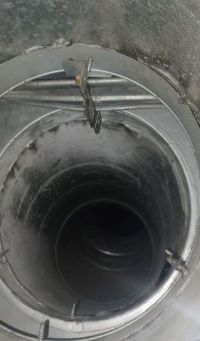
Although age alone isn’t usually a reason to replace a fire damper, there are situations where replacement is the safest and most practical option.
This may include when:
- The damper fails its operational test.
- It has become corroded or damaged.
- Parts are missing
- The installation no longer meets current requirements.
- Building alterations/ use, mean the existing damper is no longer suitable.
A trained and competent fire damper inspector will normally recommend whether a damper can be repaired or whether replacement is the better long-term solution.
| If you need new fire dampers installed, we can handle that as well! From assessment and specification to installation and testing to ensure full compliance. |
Don’t Wait Until There’s a Problem
Fire dampers spend nearly their entire lives hidden from view within ducts, but in the event of a fire they become one of the building’s most important safety systems.
Regular inspections don’t just help keep your building compliant, they provide reassurance that these life safety devices will perform when they’re needed most.
If it’s been more than a year since your fire dampers were last inspected, or you’re unsure when they were last tested, now is the ideal time to review your fire safety maintenance programme.
How Swift Fire Compliance Can Help
At Swift Fire Compliance, we carry out fire damper inspections, function testing, maintenance and remedial works for buildings across the UK. Our experienced engineers provide detailed reports, photographic evidence and practical recommendations, helping building owners and duty holders demonstrate compliance and improve fire safety.
Whether you’re managing a single building or a nationwide estate, we’re here to help ensure your fire dampers continue to protect your people, your property and your business.
Fire Damper FAQs
Do fire dampers expire?
No. Fire dampers do not have a fixed shelf life or expiry date. However, they must remain operational and in good condition, which is why regular inspection and testing are essential.
How often should fire dampers be tested?
Industry guidance recommends that fire dampers are inspected and tested at least every 12 months. In some environments, such as healthcare buildings or areas with high dust or contamination levels, more frequent testing may be required. For a full breakdown of recommended frequencies and environments, see our article on how often should fire smoke dampers be tested?.
What happens if a fire damper fails its test?
If a fire damper fails, an inspector will usually recommend whether it can be repaired or should be replaced. In most cases, the safest option is to repair or replace the damper promptly to restore compliance.
Can fire dampers be repaired instead of replaced?
Yes, many fire dampers can be repaired if the issue is minor, such as a stuck blade or faulty linkage. However, if the damper is severely corroded, damaged or no longer meets current standards, replacement will be the better long-term solution.
Who is responsible for fire damper testing?
The duty holder, responsible person, landlord or building manager is typically responsible for ensuring fire dampers are inspected, tested and maintained in line with current legislation and industry guidance. We explain this further in our article on who is responsible for fire damper testing in the UK?.
About the Author: Martin Hembling