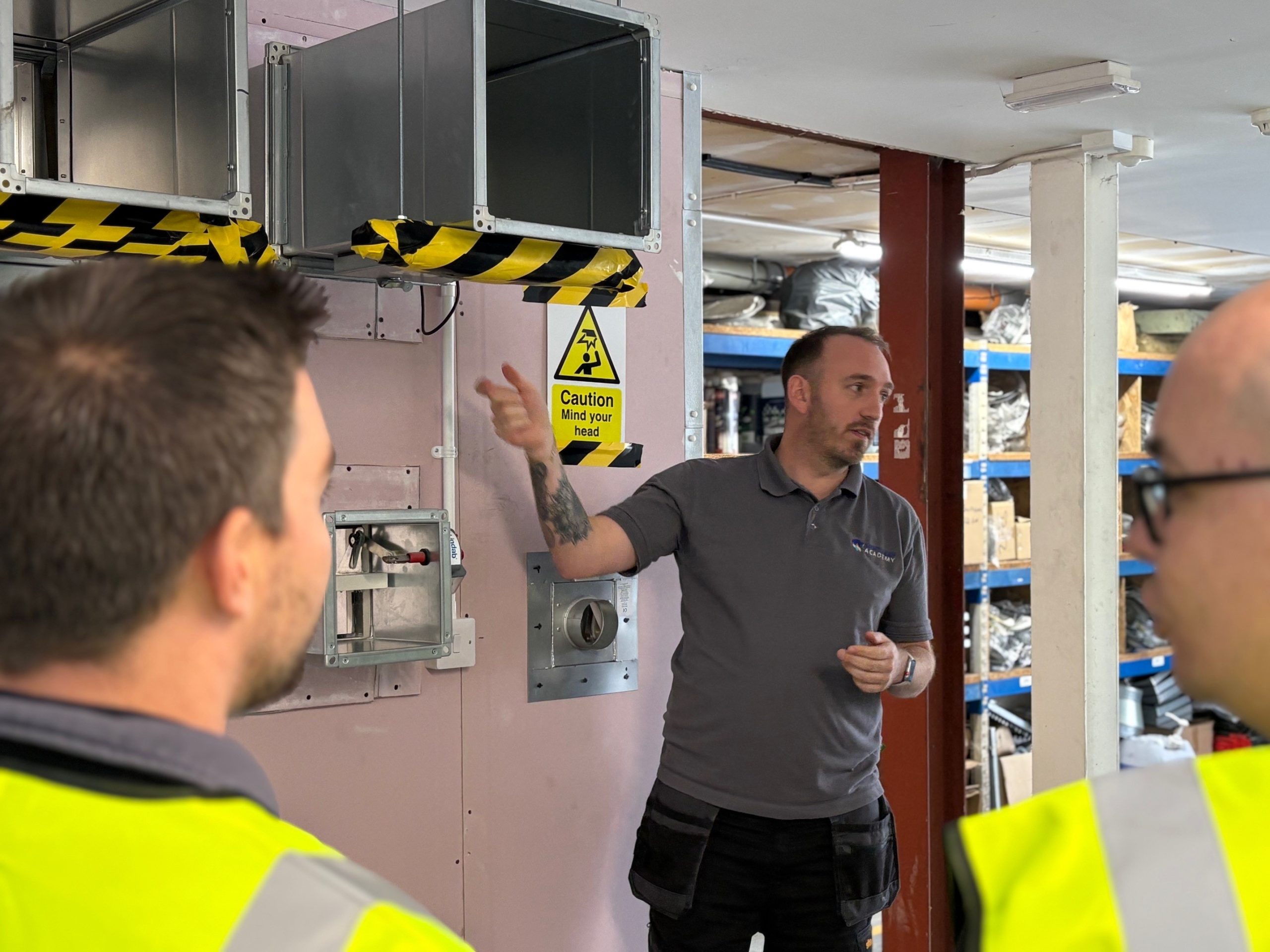
Fire dampers are one of the most important fire safety components in any commercial building. They are also among the most overlooked. Hidden inside ductwork, tucked above suspended ceilings, and absent from many building asset registers, fire dampers are often left untested for years – sometimes indefinitely.
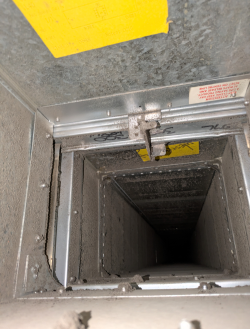
Under the Regulatory Reform (Fire Safety) Order 2005, every Responsible Person has a legal duty to ensure that fire safety systems in their building are maintained and can perform their intended function. Fire dampers are not exempt from that duty. And with HSE officers and fire prevention inspectors applying increasingly close scrutiny to damper compliance, the consequences of falling short are more significant than ever.
At Swift Fire Compliance, we work with building managers, facilities managers, and responsible persons across the UK to help them understand their obligations and put a compliant testing programme in place. This guide sets out what workplace fire damper compliance requires, what the testing process involves, and what you need to do to meet your legal duties.
What Are Fire Dampers and Why Do They Matter?
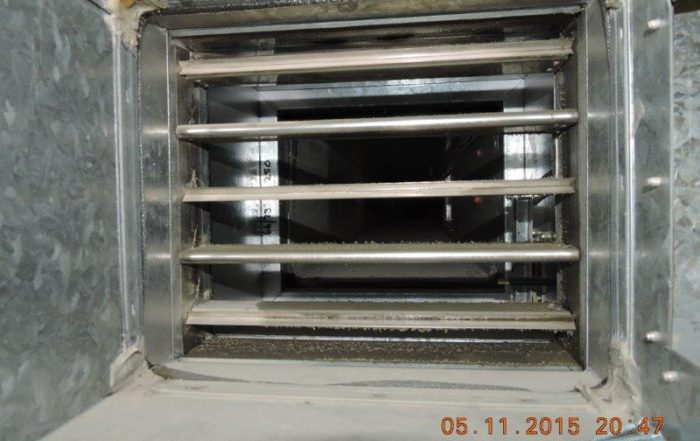
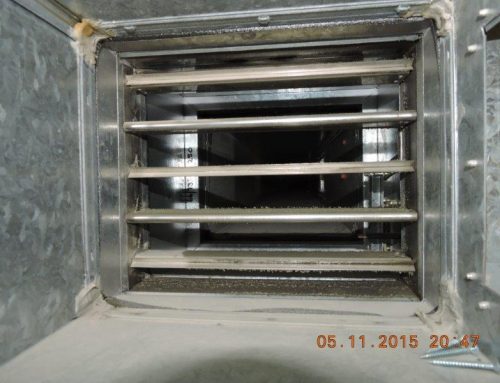
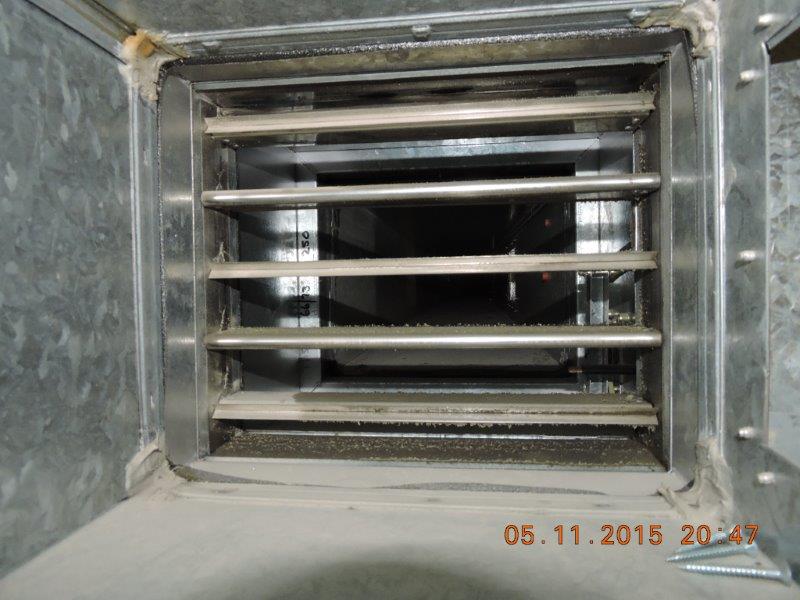
A fire damper is a passive fire protection device installed where ventilation ductwork passes through fire-resistant walls, floors, and partitions. Under normal conditions, they remain open, allowing air to flow freely through the building’s HVAC system. In the event of a fire, they are designed to close automatically, creating a barrier that helps to contain the spread of fire and smoke within a defined compartment.
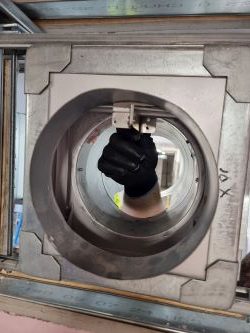
Most fire dampers operate via a fusible link – a component made from a material that melts at a specific temperature, typically around 72°C. When heat from a fire reaches this threshold, the link releases, allowing the damper blades to snap shut.
Without functioning fire dampers, ductwork effectively becomes a highway for fire and smoke, allowing both to travel rapidly through a building and compromise escape routes. They buy critical time. Time for occupants to evacuate. Time for emergency services to respond. In the most serious incidents, that time makes the difference between life and death.
What Does the Law Require?
The legal framework governing fire damper compliance in UK workplaces is clear, though many building managers are still unaware of the full extent of their obligations.
The Regulatory Reform (Fire Safety) Order 2005 requires that the Responsible Person – typically the building owner, employer, or facilities manager – ensures all fire safety measures are maintained in an efficient state and in good working order. Fire dampers fall squarely within this requirement.
BS 9999:2017, the code of practice for fire safety in the design, management, and use of buildings, sets out that all fire dampers must be tested at least annually. This is not guidance – it is the recognised compliance standard against which HSE officers and fire prevention professionals assess buildings.
Failure to maintain a compliant fire damper programme can have serious consequences:
- Building insurance may be invalidated in the event of a fire where non-compliant dampers contributed to its spread
- Enforcement action can be taken by the HSE or fire authority
In the most serious cases, where a failure to comply results in injury or death, prosecutions for corporate manslaughter are possible
It is also worth noting that many buildings do not have accurate records of where their fire dampers are located. Without a full asset register, there is no way to confirm that all dampers have been tested, leaving compliance gaps that are difficult to defend under scrutiny.
How Often Do Fire Dampers Need to Be Tested?
For most buildings, annual testing is the minimum requirement under BS 9999:2017. However, testing frequency should increase in certain circumstances:
- Environments with high levels of dust or airborne pollutants require more frequent testing, at intervals appropriate to the level of contamination
- Healthcare settings may require testing more regularly given the vulnerability of occupants and the specific requirements of HTM documents
- All fire dampers should be tested upon initial installation before the building is occupied
If you are unsure how frequently your dampers should be tested, our guide to how often fire and smoke dampers should be tested covers the requirements in full, or our team can carry out an assessment of your building.
What Does Fire Damper Testing Actually Involve?
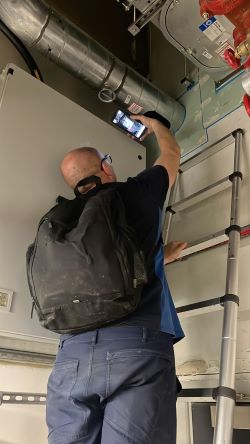
Understanding what you are commissioning helps you ask the right questions and evaluate the quality of the service you receive. Our guide to what happens during a fire damper inspection covers the process step by step, but in summary a thorough programme should include the following:
Asset register creation or update. Before testing can begin, every damper in the building needs to be located and logged. Many buildings have incomplete or inaccurate records. Our engineers will create or update a full asset register as part of the service.
Access panel installation. Fire dampers are often inaccessible without dedicated access points. Where access panels do not exist, we will create them – ensuring that future testing and maintenance can be carried out without the same obstacles.
- Function testing. Each damper is triggered to confirm that it closes fully and correctly. This is the core test and the one that provides documented evidence of operational status.
- Cleaning of channels and runners. Dust, debris, and corrosion can prevent dampers from closing fully. Cleaning is an essential part of maintenance, not an optional extra.
- Reset and reinstatement. Once tested, each damper is reset to its operational position and the ventilation system is reinstated.
Compliance report. Following every inspection, we produce a detailed post-inspection report including damper locations, test results, photographic evidence, and any recommendations for remedial work or replacement. This is made available via our online client portal so you always have immediate access to your compliance records.
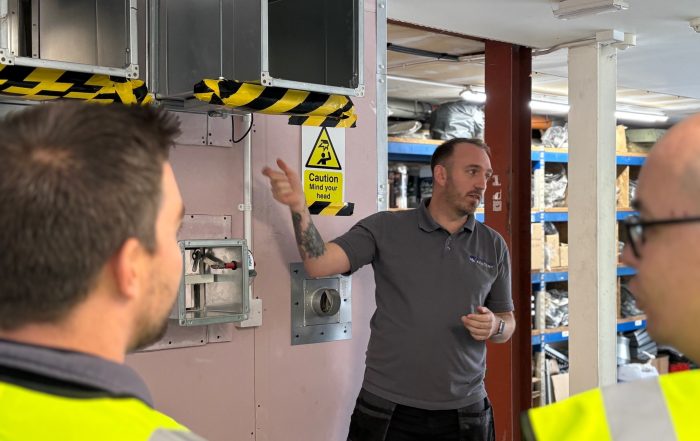
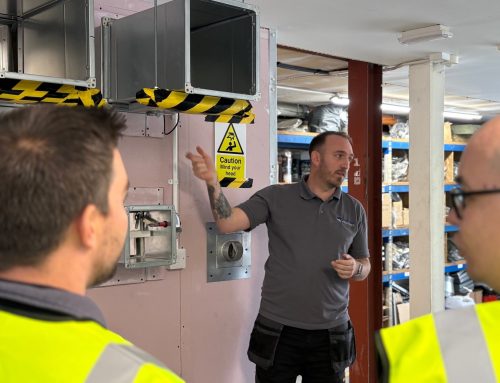
Watch our team explain the testing process in more detail:
Who Is Responsible for Fire Damper Testing in the Workplace?
Under the Regulatory Reform (Fire Safety) Order 2005, the Responsible Person bears legal accountability for ensuring fire safety measures are properly maintained. In a workplace, this is typically the employer. In a multi-occupied building, it may be the building owner or managing agent.
This responsibility cannot be passed on by simply appointing a contractor. The Responsible Person must ensure that the contractor they appoint is competent, that the work is carried out to the required standard, and that documentation is retained to demonstrate compliance. Appointing Swift Fire Compliance manages the practical delivery – it does not transfer legal accountability.
This is why documentation matters as much as the testing itself. In the event of a fire safety audit, an insurance claim, or a legal inquiry, the burden of proof falls on the Responsible Person. Without detailed, dated records of every test and its outcome, compliance cannot be demonstrated regardless of whether the work was done.
For a full breakdown of legal duties and who they apply to, read our article on who is responsible for fire damper testing in the UK.
Why Choose Swift Fire Compliance?

Swift Fire Compliance is a dedicated specialist in fire and smoke control damper testing, backed by over 40 years of experience through our parent company, Swiftclean – one of the UK’s longest-established building compliance contractors.
Our directly employed engineers carry out every aspect of the fire damper testing process, from initial asset surveys and access panel installation through to function testing, cleaning, and the production of detailed compliance documentation. We do not use subcontractors. Every visit is carried out to the same standard, regardless of building type or complexity.
We work across a wide range of sectors including commercial offices, healthcare, social housing, education, hospitality, and high-security sites, bringing the same level of technical expertise and compliance rigour to every environment.
Following every inspection, we provide a full compliance report via our online client portal – giving you clear, accessible evidence that your obligations have been met and your building is protected.
Is Your Building Compliant?
If you do not have a current, documented fire damper testing programme in place, now is the time to establish one. The legal obligations are clear, the risks of non-compliance are serious, and the process of getting compliant is straightforward when you work with the right specialist.
What happens if my building fails a fire damper inspection?
If a damper fails its inspection, it should be repaired or replaced as soon as reasonably practicable. A failed damper represents a gap in your building’s fire compartmentation, and leaving it unaddressed is not a defensible position under the Regulatory Reform (Fire Safety) Order 2005. Swift Fire Compliance can carry out the remedial works required and re-test the affected dampers on completion, providing updated compliance documentation for your records.
Common Questions About Fire Damper Compliance in the Workplace
What happens if my building fails a fire damper inspection?
If a damper fails its inspection, it should be repaired or replaced as soon as reasonably practicable. A failed damper represents a gap in your building’s fire compartmentation and leaving it unaddressed is not a defensible position under the Regulatory Reform (Fire Safety) Order 2005. Swift Fire Compliance can carry out the remedial works required and re-test the affected dampers on completion, providing updated compliance documentation for your records.
Do fire dampers need to be tested in all types of workplace?
Any workplace where ventilation ductwork passes through fire-resistant walls, floors, or partitions is likely to have fire dampers installed and will be subject to the testing requirements set out in BS 9999:2017. This includes commercial offices, warehouses, retail premises, healthcare facilities, schools, and hospitality venues. If you are unsure whether your building has fire dampers or when they were last tested, Swift Fire Compliance can carry out a full survey and assessment.
About the Author: Richard Crews