Once your kitchen extract system has been cleaned to the TR19® Grease specification, you’ll want confirmation that the work has been completed and that your system meets the required level of cleanliness. You may even need this report to pass on to your insurers or Landlord to evidence your compliance, and for their own record-keeping.
What Is a Post-Clean Verification Report?
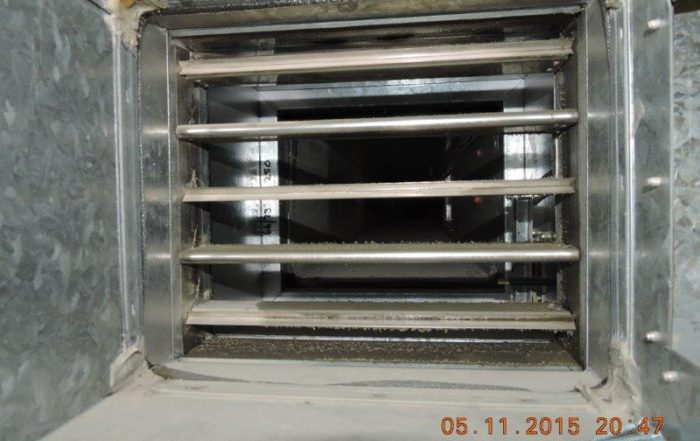
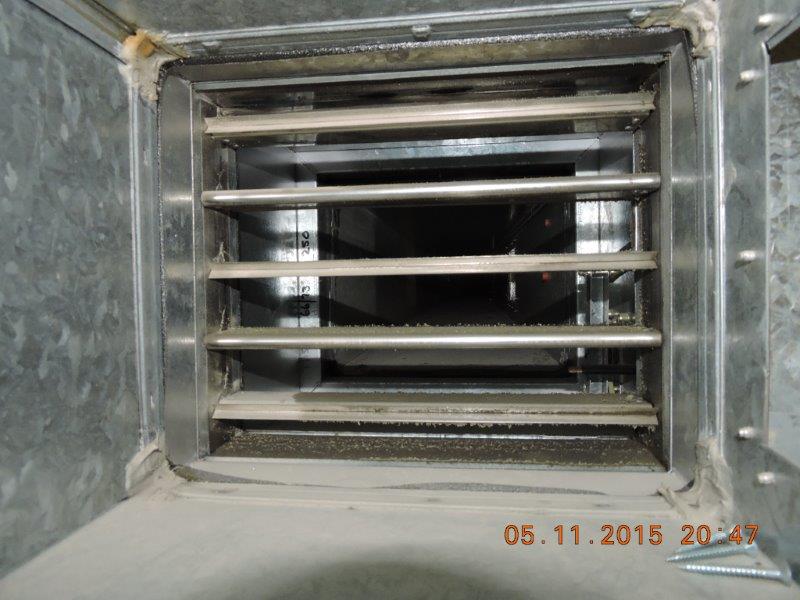
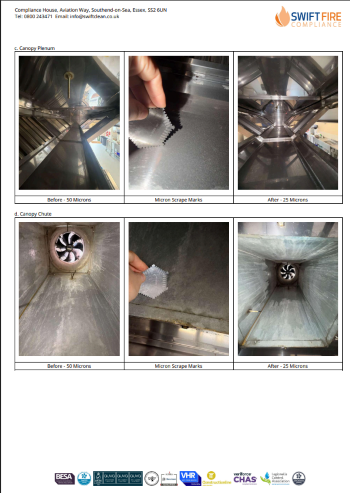
A Post-Clean Verification Report (PCVR) provides evidence of your system having a compliant clean. It includes details of the work carried out, photographic evidence, cleanliness measurements where applicable, and confirmation that the system has been cleaned in line with BESA TR19® Grease guidance. As mentioned, this report is often requested by insurers, enforcing authorities and other stakeholders as proof of compliance.
Kitchen Extract Post-Clean Report Turnaround Time
The TR19 Grease specification states that a post-clean verification report should be submitted to the client within 30 days of the clean being completed. This is the industry minimum — and for many duty holders managing active compliance programmes or responding to insurer requests, 30 days is far too long to wait.
When assessing kitchen extract cleaning contractors, turnaround time for documentation is worth asking about directly before booking. A contractor who cannot commit to a reasonable reporting timescale is one whose compliance documentation may not hold up under scrutiny when you need it most.
| At Swift Fire Compliance, our target is to issue all Post-Clean Verification Reports within 5 working days of the clean being completed. In reality, we consistently exceed this target, with the majority of reports issued within just 2 working days, helping our clients demonstrate compliance quickly and maintain accurate audit records. |
Why the Report Matters for Fire Safety Compliance
For duty holders, the Post-Clean Verification Report is more than an administrative document. Under the Regulatory Reform (Fire Safety) Order 2005, the Responsible Person has a legal duty to ensure that fire risks within the building are properly managed and evidenced. Grease accumulation in kitchen extract ductwork is a well-documented fire risk, and maintaining clean, compliant systems (with documentation to prove it) is part of that duty.
Many commercial insurance policies now require documented evidence of TR19 Grease compliant cleaning before they will settle a claim following a kitchen fire. Where that evidence cannot be produced, a claim may be rejected regardless of whether a clean actually took place.
We understand that timely documentation is just as important as the cleaning itself. Whether you’re preparing for an inspection, satisfying insurance requirements or maintaining your compliance records, our team works hard to ensure your report reaches you as quickly as possible.
What to Do If Your Report Is Delayed or Incomplete
If your post-clean report has not arrived within the timeframe your contractor indicated, contact them directly to request an update. A reputable contractor should be able to confirm when the report will be issued and provide it promptly.
If the report arrives but is missing key elements, such as pre and post-clean grease readings, photographic evidence, or engineer sign-off, it may not be sufficient for compliance purposes. Do not assume that a document headed “post-clean report” automatically meets TR19 Grease requirements. Review it against the expected contents before filing it as part of your compliance records.
Persistent delays or incomplete documentation are a signal that the contractor may not be producing reports to the standard TR19 Grease requires. This is worth addressing ahead of your next clean rather than at the point when the documentation is urgently needed.
Important: A kitchen extract clean without a Post-Clean Verification Report cannot be used to demonstrate TR19 Grease compliance. The report is the evidence, not the clean itself. Without it, your compliance records are incomplete.
How to Store Your Post-Clean Verification Report
Once received, your report should be stored as part of your fire safety compliance records and made accessible to relevant parties on request. Best practice is to retain kitchen extract cleaning documentation for a minimum of six years, alongside your fire risk assessment, fire damper test reports, and other passive fire protection records.
Questions About Your Kitchen Extract Compliance?
If you are unsure whether your post-clean documentation meets TR19 Grease requirements, or you need support with your wider kitchen extract fire safety obligations, our team is here to help.
Speak to Our Team Call Us: 0800 243 471About the Author: Chloe Nicholls