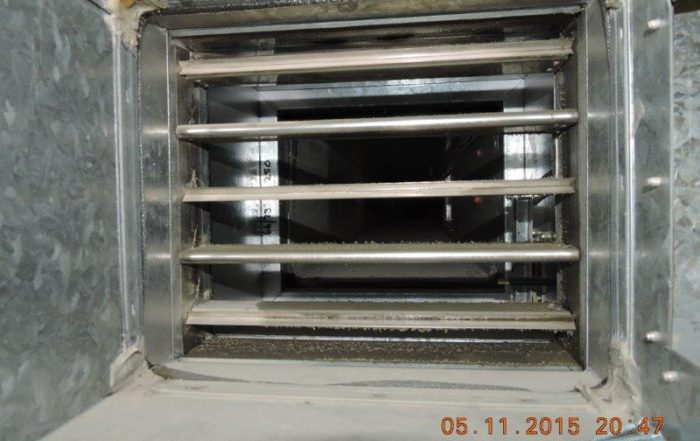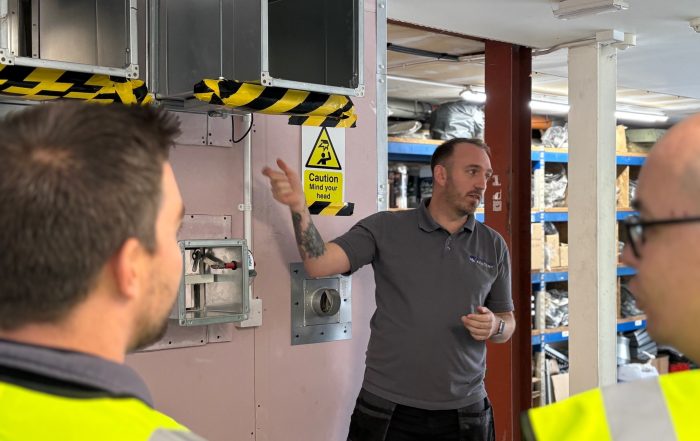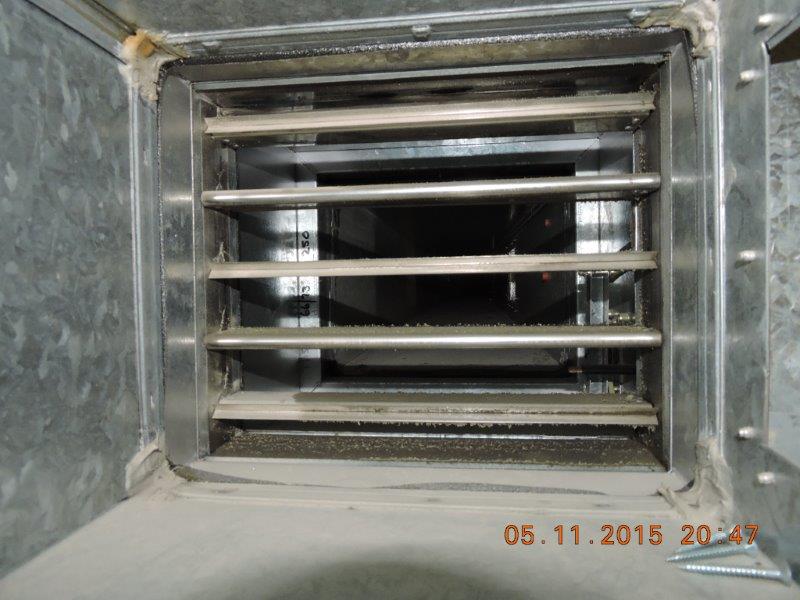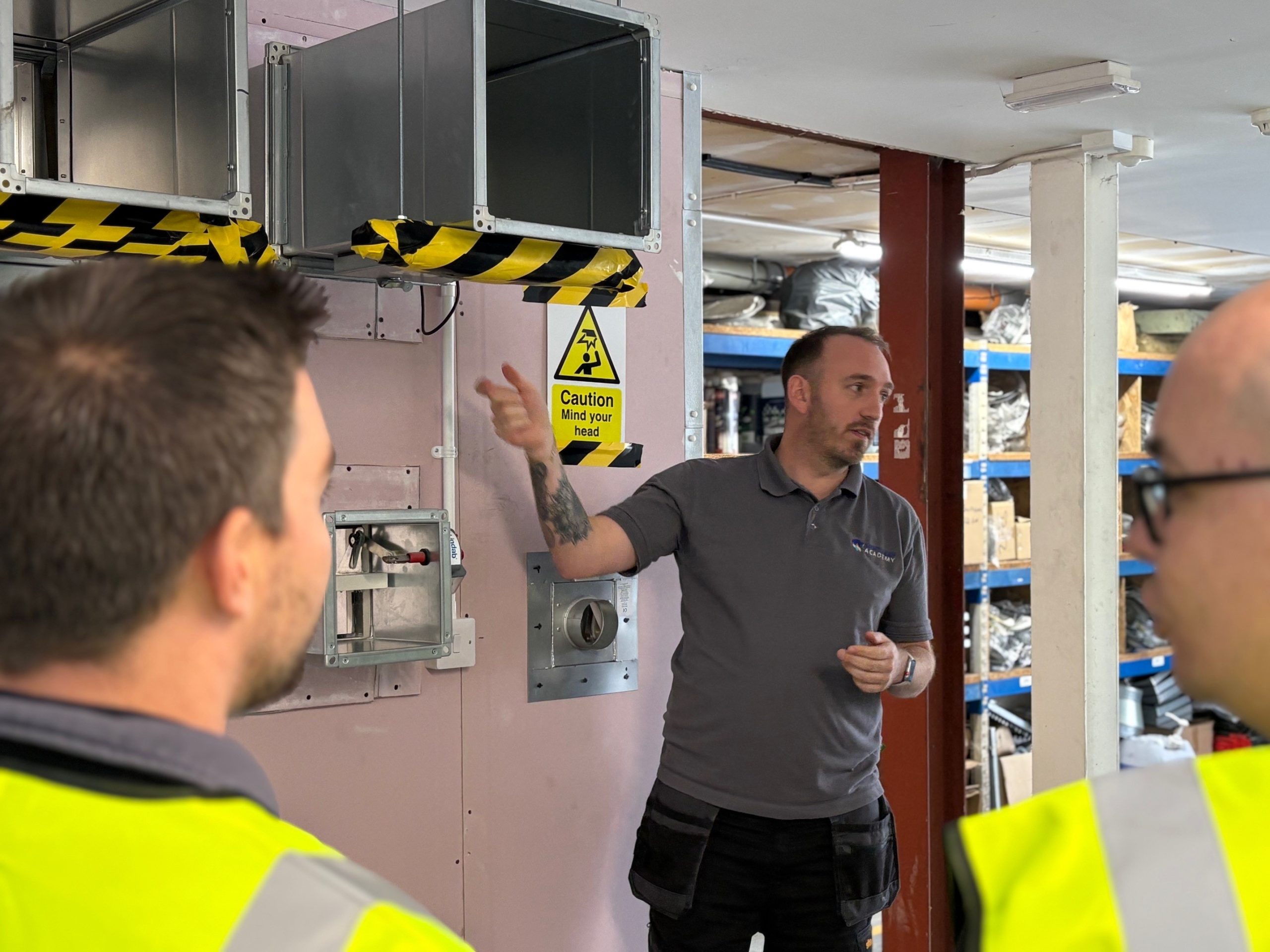
Fire dampers are often hidden above ceilings, inside service risers or behind access panels. This makes them easy to overlook, but difficult to manage properly if you do not have accurate records.
As a facilities manager, you should be able to answer three simple questions:
- Where is every fire damper in the building?
- When was each damper last inspected and function tested?
- Can you provide evidence of the result?
If you cannot answer all three confidently, there may be gaps in your fire safety records.
Why Locating Every Fire Damper Matters
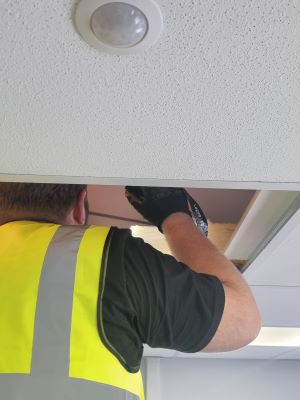
Fire dampers are installed where ventilation ductwork passes through fire-resisting walls, floors or partitions. If a fire occurs, they are designed to close and help slow the spread of fire and smoke through the ductwork.
However, a damper cannot be properly inspected, tested or maintained if nobody knows where it is, or if it cannot be safely accessed.
In a large or complex building, there may be hundreds of dampers. Drawings may be out of date, labels may be missing and previous reports may use inconsistent descriptions. Refurbishment work can also cover access panels or make existing location information unreliable.
This is why every fire damper should have a clear identity and an accurate location.
What Does DW145 Say?
DW145 is the Building Engineering Services Association’s (The BESA for short) guide to good practice for the installation, design, selection, inspection and maintenance of fire dampers.
The guidance places importance on making sure dampers can be found and accessed for inspection, testing, maintenance and repair. It also supports good record keeping throughout the life of the building.
For facilities managers, the message is straightforward: it is not enough to believe that all dampers have been tested. You need a clear audit trail showing which assets were found, accessed and tested, and what happened to any that could not be inspected.
The three compliance questions every facilities manager should be able to answer: Where is every fire damper in the building? When was each damper last inspected and function tested? Can you provide documented evidence of the result? If any of these cannot be answered confidently, your fire safety records have gaps that need to be addressed.
Asset Tagging Creates a Clear Audit Trail

Asset tagging gives every fire damper its own unique identification number. That number can then be used consistently on the physical label, asset register, photographs and inspection reports.
For example, instead of recording a damper as ‘above ceiling near office,’ it can be identified as ‘FD-027’ with a precise building, floor and room location.
This makes future inspections quicker and more consistent. It also helps facilities teams, contractors, auditors and enforcing authorities refer to the same asset without confusion.
Most importantly, asset tagging helps prevent dampers from being missed. We utilise QR codes on our asset tag stickers to simplify recordkeeping and reporting consistently.
How Swift Fire Compliance approaches asset tagging: We utilise QR codes on our asset tag stickers. Scanning the QR code on any tagged damper links directly to that damper’s inspection record, test history and location data, making it simple for facilities teams, contractors, auditors and enforcing authorities to access consistent, up-to-date information about every asset in the building.
How Our Fire Damper Inspection Service Can Help
Swift Fire Compliance provides professional fire damper inspection and function-testing services for buildings across the UK.
Our trained engineers can help locate and identify your fire dampers, inspect their condition and test that they operate correctly. Where appropriate, dampers can be asset tagged so that each one can be easily matched to your records.
During an inspection, our engineers can check:
- Whether the damper can be safely accessed
- Its general condition
- The condition of the ductwork (which could involve testing as well if required).
Then during function testing we also check and report on:
- Whether there are visible obstructions, damage or corrosion
- Whether it closes correctly during the function test
- Whether it can be correctly reset
- Whether there are installation or surrounding compartmentation concerns
- Whether further remedial work is required
| Inspection Stage | What We Check | What It Tells You |
|---|---|---|
| Location and access | Whether each damper can be found and safely accessed | Identifies accessibility issues that must be resolved before testing can proceed |
| Physical condition | Corrosion, damage, obstructions and ductwork condition | Establishes whether the damper is likely to function and identifies remedial needs |
| Function test | Whether the damper closes fully and can be correctly reset | Confirms operational status and provides the core compliance evidence |
| Compartmentation | Surrounding construction and installation concerns | Identifies breaches in fire-resisting construction that may require remedial works |
If a damper cannot be accessed or tested, this should not disappear from the records. Its status and location should be clearly reported, together with the recommended next steps to resolve the issue. An inaccessible damper is still a compliance obligation that must be managed, not ignored.
How to Use Your Post-Visit Verification Report
Following your inspection, refer to the post-visit verification report supplied by Swift Fire Compliance.
This report provides the evidence needed to understand what was found during the visit. It should help you see which dampers were inspected, their unique references and locations, the test results, photographic evidence and any issues requiring attention.
Your report should not be filed away and forgotten. Use it to update your building’s asset register, check that every expected damper has been accounted for, identify inaccessible or untested dampers, plan and prioritise remedial work as well as confirm that failed dampers have been repaired and retested.
Most importantly. It will provide evidence during audits, insurance reviews or regulatory inspections, and you can also plan the next inspection programme
If the number of dampers in the report does not match your drawings, previous records or expected asset total, further investigation may be necessary.
Important: If the number of dampers recorded in your post-visit verification report does not match your building drawings, previous reports or your expected asset total, further investigation is necessary. A discrepancy of this kind suggests that dampers may have been missed, that the building records are inaccurate, or that changes to the building have not been reflected in the compliance programme.
Could You Prove it Today?
If an auditor asked you today to show the location, condition and inspection history of every fire damper, could you do it?
A clear asset register, consistent QR code tagging and a detailed post-visit verification report can turn a difficult question into a straightforward one. Together, they demonstrate that your dampers are known, accessible, regularly inspected and properly managed. That is the standard the Regulatory Reform (Fire Safety) Order 2005 expects of the Responsible Person, and it is the standard that inspectors and insurers will measure you against.

If you are unsure whether every fire damper in your building has been located, tagged and tested, book a call with Sam Thompson at Swift Fire Compliance. Sam can answer your questions, discuss your current records and help you plan the right inspection programme for your building.
Book a Call with Sam Thompson
If you are unsure whether every fire damper in your building has been located, tagged and tested, speak to Sam Thompson at Swift Fire Compliance. Sam can answer your questions, review your current records and help you plan the right inspection programme for your building.
Book a Call with Sam Call Us: 0800 206 2707Your Fire Damper Location and Records Questions Answered
How do I find out how many fire dampers are in my building?
The starting point is your building’s as-built drawings or fire strategy documentation, which should indicate where fire dampers have been installed. However, drawings are often out of date, particularly in buildings that have undergone refurbishment. A professional survey by a qualified fire damper specialist is the most reliable way to locate every damper, verify it against available records, and identify any that are missing from your documentation.
What should I do if a fire damper cannot be accessed during an inspection?
An inaccessible damper cannot be function tested and therefore cannot be confirmed as compliant. It should be recorded in the inspection report with its location, the reason it could not be accessed, and the recommended remedial action, which typically involves installing a suitable access panel. The Responsible Person should arrange for this work to be completed and the damper retested as soon as reasonably practicable. Leaving an inaccessible damper unresolved is not an acceptable outcome from a compliance perspective.
What is the difference between a fire damper inspection and a function test?
A fire damper inspection involves a visual assessment of the damper’s physical condition, including checks for corrosion, damage, obstructions and surrounding compartmentation concerns. A function test, also known as a drop test, involves triggering the damper to confirm that it closes fully and correctly and can be reset to its operational position. Both are required for a compliant testing programme. An inspection without a function test does not confirm that the damper will operate in a fire.
How long should fire damper inspection records be kept?
There is no single statutory retention period for fire damper test records, but best practice is to retain them for the lifetime of the building or at least for a minimum period consistent with your insurer’s requirements. Maintaining a complete and continuous inspection history for every damper is valuable in the event of a fire safety audit, insurance claim or regulatory investigation. Our online client portal stores your inspection records securely and makes them accessible at any time.
What happens if a fire damper fails its function test?
A damper that fails its function test must be repaired or replaced as soon as reasonably practicable. The failure should be clearly recorded in the post-visit verification report along with the nature of the fault and the recommended remedial action. Once repairs are complete, the damper must be retested and the updated result documented. Swift Fire Compliance can carry out remedial works and retesting as part of a single managed programme, ensuring your records reflect the current compliant status of every damper.
About the Author: Abbey Maxwell