Fire & Smoke Damper Standards UK: What You Need to Know
Fire and smoke dampers play an important role in maintaining a building’s fire compartmentation and controlling the spread of fire and smoke. But with several British and European standards covering their specification, testing and maintenance, understanding which standard applies can be confusing.
So, what are the relevant British Standards for smoke dampers and fire damper testing?
Quick Answer:
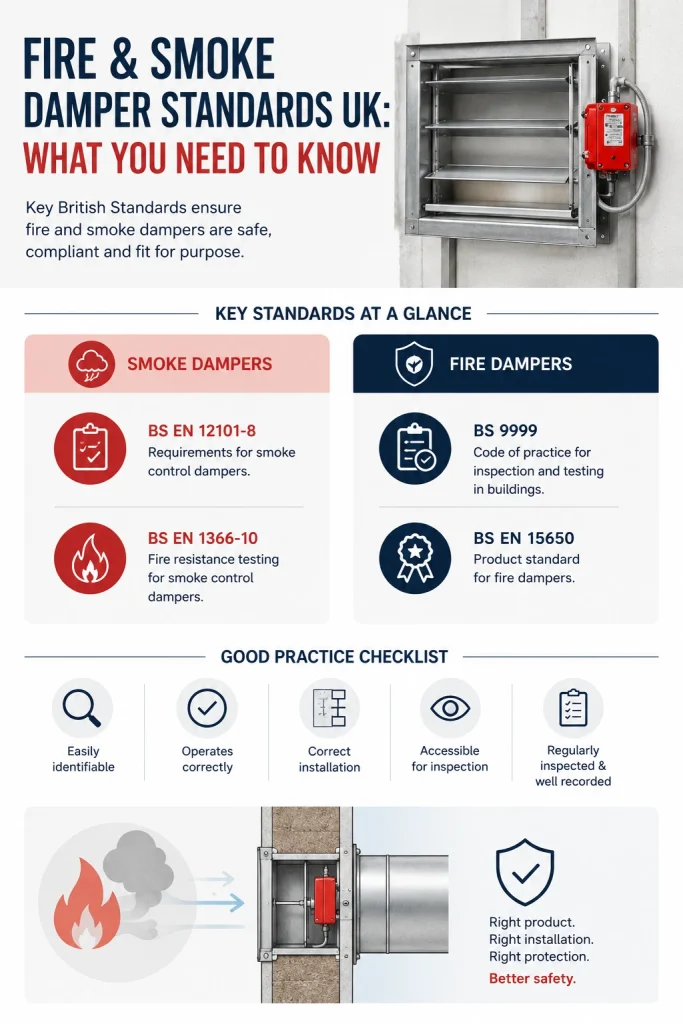
BS 9999 is a key UK code of practice for the management and maintenance of fire safety systems in occupied buildings, including fire dampers. Product, classification and fire-resistance test standards, such as BS EN 15650, BS EN 1366-2 and BS EN 13501-3, are also relevant to fire dampers. Smoke control dampers are covered by standards including BS EN 12101-8, BS EN 1366-10 and BS EN 13501-4. BESA DW145 provides industry good-practice guidance for the design, installation, inspection and maintenance of fire and smoke dampers.
What is the British Standard for Smoke Dampers?
The principal standard for smoke control dampers is BS EN 12101-8, which specifies requirements for smoke control dampers used within smoke and heat control systems.
However, this isn’t the only standard that may be relevant. The applicable requirements depend on the type of damper, its purpose and whether you are considering product performance, installation or ongoing inspection and maintenance.
For example, BS EN 1366-10 covers fire-resistance testing of smoke control dampers, while BS 7346-8 provides recommendations relating to the planning, design, installation, commissioning and maintenance of smoke control systems.
This is why it is important to establish exactly what type of damper is installed before deciding which standard applies.
What is the British Standard for Fire Damper Testing?
When people ask about the British Standard for fire damper testing, they are usually referring to the routine inspection and testing of fire dampers already installed within a building.
BS 9999 is a key UK code of practice covering fire safety management and includes recommendations for the inspection and maintenance of fire dampers.
This should not be confused with BS EN 1366-2, which concerns the fire-resistance testing of fire damper products or BS EN 15650 which is the European product standard for fire dampers. It specifies the requirements that fire damper products must meet, including performance characteristics, conformity assessment and product marking.
Industry guidance such as BESA DW 145 is also highly relevant. It covers good practice across the life of fire and smoke damper systems, including installation, inspection and maintenance.
| Standard or Guidance | Main Relevance | Who It Is Most Useful For |
|---|---|---|
| BS 9999 | Fire safety in the design, management and use of buildings, including recommendations for inspection and maintenance. | Responsible Persons, building owners and facilities managers. |
| BS EN 15650 | Product standard for fire dampers used in ventilation systems. | Manufacturers, specifiers, designers and installers. |
| BS EN 1366-2 | Fire-resistance test method for fire dampers. | Manufacturers, designers, installers and product specifiers. |
| BS EN 13501-3 | Classification of fire-resistant ducts and fire damper products. | Designers, installers, specifiers and those reviewing certification. |
| BS EN 12101-8 | Product requirements for smoke control dampers within smoke and heat control systems. | Smoke-control system designers, installers and product specifiers. |
| BS EN 1366-10 | Fire-resistance test method for smoke control dampers. | Manufacturers and designers of smoke-control damper systems. |
| BS EN 13501-4 | Classification of smoke control dampers using fire-resistance test data. | Designers, installers and those reviewing smoke-control performance. |
| BS 7346-8 | Recommendations for planning, design, installation, commissioning and maintenance of smoke control systems. | Fire engineers, building designers, contractors and Responsible Persons. |
| BESA DW145 | Good-practice guidance for the installation, design, selection, inspection and maintenance of fire and smoke dampers. | Building owners, facilities teams, designers, installers and maintenance providers. |
What Does Fire Damper Testing Involve?
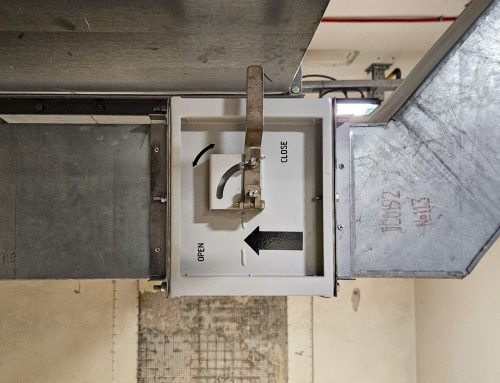
A proper fire damper testing visit is more than a visual check through an access panel. A competent inspection programme should consider the condition, accessibility and operational function of each damper.
Typical activities include:
- Confirming the damper’s location and asset reference.
- Checking that suitable access is available.
- Inspecting the damper for dirt, dust, corrosion, damage or obstruction.
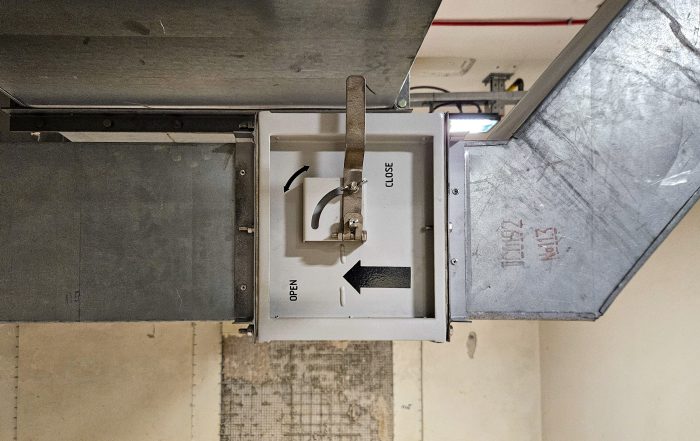
- Checking the fusible link, springs, guide channels and visible components where accessible.
- Function testing the damper to confirm it closes correctly.
- Resetting the damper to its normal operating position.
- Taking photographic evidence where appropriate.
- Recording the result, defects and recommendations.
- Identifying remedial work and arranging retesting after repair.
For motorised fire dampers and combined fire and smoke dampers, the test may also involve checking the actuator, controls, latching arrangements, power supply and correct operation between open and closed positions.
The Responsible Person’s Role
The Responsible Person has a duty to ensure that relevant fire safety systems are maintained in an efficient state, in efficient working order and in good repair. Appointing a specialist contractor is an important part of managing the practical work, but it does not remove the Responsible Person’s overall accountability.
For fire and smoke dampers, this means the Responsible Person should be able to demonstrate:
- An accurate asset register or reasonable plan to establish one.
- Suitable inspection and testing arrangements.
- Competent contractors and clear scopes of work.
- Test reports and photographic evidence where appropriate.
- A documented defects and remedial action process.
- Retesting after repairs.
- Accessible records that can be reviewed during audits, inspections or insurance enquiries.
Compliance reminder:
A report that identifies faults is not the end of the process. The Responsible Person should ensure that defects are risk assessed, assigned, repaired where required and closed out with supporting evidence.
Need Help with Fire Damper Compliance?
Understanding which standards apply is only the first step. Building owners, responsible persons and facilities teams also need reliable evidence showing what dampers are installed, where they are located, whether they operate correctly and where remedial action may be required.
Swift Fire Compliance provides professional fire damper inspection and testing, helping you maintain clear records and identify compliance issues before they become bigger problems.
Contact our team to discuss your fire and smoke damper testing requirements.
Need Help With Fire or Smoke Damper Compliance?
Speak to Swift Fire Compliance about fire damper testing, smoke damper inspections, asset registers, remedial works and compliance records for your building.
Speak to Our Specialists Call 0800 243 471Fire and Smoke Damper British Standards FAQs
BS 9999 is a key code of practice for fire safety in the design, management and use of buildings. It includes recommendations for the inspection and maintenance of fire dampers in occupied buildings. However, it is not the only relevant document. Product, fire-resistance testing and classification standards, as well as BESA DW145 guidance, may also apply depending on the damper type and the issue being considered.
BS EN 12101-8 sets product requirements for smoke control dampers used in smoke and heat control systems. It is most relevant to the specification and performance of smoke control dampers, rather than routine building maintenance alone.
BS 9999 guidance is commonly understood to recommend that fire dampers are tested by a competent person at least annually. Dampers in dust-laden, grease-laden or similarly challenging environments may need testing more frequently, based on the level of contamination and site-specific risk assessment.
Yes. Smoke dampers are often motorised and need to be tested as part of the building’s fire detection or smoke-control sequence. Testing may need to confirm actuator operation, response to control signals, power supply and interface operation. Combined fire and smoke dampers require both the thermal and motorised functions to be assessed.
BESA DW145 is industry guidance rather than legislation. However, it is an important good-practice document that supports the design, selection, installation, inspection and maintenance of fire and smoke dampers. Following recognised guidance can help demonstrate a robust approach to compliance, especially when used alongside the building fire strategy, relevant standards and manufacturer instructions.
Keep an asset register showing the location and identification of each damper, together with inspection and test reports, photographs where provided, details of defects, remedial actions, retesting results and the next planned inspection date. Accurate and verifiable records are an important part of demonstrating that dampers are being managed effectively.
About the Author: Richard Crews