
For many schools, colleges and academies, the summer holidays represent far more than a break from teaching. They provide a valuable opportunity to complete essential maintenance and compliance work that would otherwise disrupt pupils, catering staff and day-to-day operations.

One area that is often overlooked until the last minute is kitchen extract cleaning. School kitchens operate almost continuously throughout the academic year, preparing hundreds or even thousands of meals each day. During this time, grease naturally builds up inside extract canopies, ductwork, filters and fans. If this grease is not professionally removed, it can become a significant fire risk while reducing the efficiency of the kitchen ventilation system.
Summer provides the ideal opportunity to carry out a thorough clean before catering operations begin again in September. It also allows schools to demonstrate compliance with the TR19® Grease specification, meet insurer expectations and ensure their kitchen ventilation system is operating safely before staff and pupils return.
Whether you manage a primary school, secondary school, academy, college or university, planning your kitchen extract cleaning early can help avoid unnecessary disruption and ensure your building is ready for the new academic year.
Not Sure if Your School Is Compliant?
Use our free compliance checkers to assess whether your school is meeting best practice for kitchen extract cleaning, fire safety, water hygiene and ventilation hygiene. It’s a quick and easy way to identify potential compliance gaps before the new academic year begins.
Check Your ComplianceWhy Summer Is the Best Time for Kitchen Extract Cleaning

Unlike many routine maintenance tasks, kitchen extract cleaning cannot usually be completed while a commercial kitchen is operating.
The cleaning process involves dismantling filters, accessing ductwork, cleaning extract fans and removing grease deposits that may have accumulated over many months. Depending on the size of the catering facility, this can take several hours or, in larger schools, multiple days.
Completing this work during term time often means:
- Closing catering facilities
- Rearranging meal provision
- Restricting access to kitchens
- Working outside normal operating hours
- Creating unnecessary disruption for staff
During the summer holidays, these challenges largely disappear.
With kitchens temporarily out of use, engineers have unrestricted access to ventilation systems, allowing a much more thorough clean while avoiding disruption to school operations.
Summer also provides time to:
- Remove heavy grease deposits from inaccessible ductwork
- Inspect the ventilation system for damage or defects
- Carry out any recommended remedial works
- Produce comprehensive compliance documentation
- Prepare the kitchen for September
Rather than viewing kitchen extract cleaning as another maintenance task, schools should see it as part of their wider fire safety and compliance strategy.
Why Grease Build-Up Should Never Be Ignored
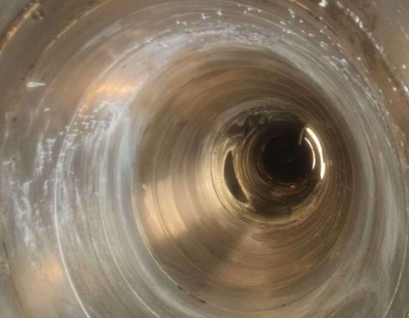
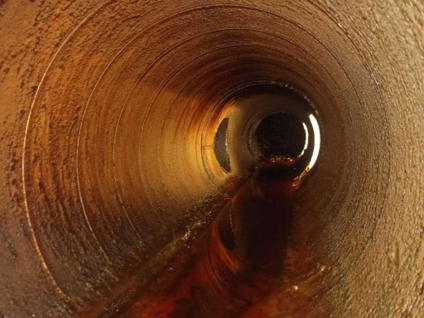
Every meal prepared inside a commercial kitchen releases grease particles into the air.
Although filters capture much of this grease, a significant amount continues through the ventilation system where it settles inside ductwork, extract fans and other components.
Over time these deposits become thicker and more difficult to remove.
The consequences include:
- Increased fire risk
- Reduced airflow
- Poor kitchen ventilation
- Increased odours
- Higher energy consumption
- Greater wear on ventilation equipment
Most importantly, grease is highly combustible.
If a cooking fire reaches accumulated grease inside the extract system, flames can spread rapidly through the ductwork, potentially affecting other parts of the building.
For schools, where large numbers of children, staff and visitors occupy the premises every day, reducing this fire risk should always be a priority.
Understanding TR19® Grease Guidance
The TR19® Grease specification, published by the Building Engineering Services Association (BESA), provides recognised industry guidance for the cleaning of commercial kitchen extract systems.
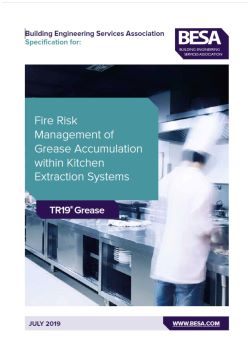
Rather than recommending a single cleaning frequency for every kitchen, TR19® Grease bases cleaning schedules on how heavily the kitchen is used.
Factors include:
- Number of meals prepared
- Hours of operation
- Type of cooking undertaken
- Amount of grease generated
For many school kitchens, annual cleaning represents the minimum requirement. However, larger educational establishments preparing meals throughout the day may require more frequent cleaning depending on their catering operations.
Following recognised guidance helps schools demonstrate that they are actively managing fire risks associated with grease accumulation.
Schools should also maintain cleaning records and certification as evidence that ventilation systems have been professionally cleaned.
Typical Cleaning Frequencies
| Kitchen Usage | Recommended Cleaning Frequency |
| Heavy use (12 to 16 hours per day) | Every 3 months |
| Moderate use (6 to 12 hours per day) | Every 6 months |
| Light use (2 to 6 hours per day) | Every 12 months |
| Very light use | Risk assessed |
While many schools fall into the annual cleaning category, every kitchen should be assessed individually.
Has Your School Kitchen Extract System Been Cleaned in the Last 12 Months?
Many school kitchens require professional kitchen extract cleaning at least once a year to help reduce fire risks and support TR19® Grease guidance. If it’s been 12 months or longer, now is the perfect time to book your summer clean before the new academic year.
Book Your School Kitchen Clean Call 0800 243 471Why Insurance Providers Expect Evidence
Many insurers now expect commercial kitchens to demonstrate that extract systems are professionally cleaned and maintained.
If a fire occurs and excessive grease deposits are discovered within the ductwork, insurers may question whether reasonable precautions were taken to reduce the risk.
Professional kitchen extract cleaning provides documented evidence that the ventilation system has been maintained in line with recognised industry guidance.
This documentation can prove invaluable during insurance claims, fire investigations and health and safety audits.
Why Booking Early Matters for Schools
Summer is the busiest period of the year for school estates teams and compliance contractors. Alongside planned refurbishment projects, decorating, mechanical servicing and building maintenance, many schools also schedule specialist services such as kitchen extract cleaning, ventilation hygiene, fire damper testing and water hygiene works.
Waiting until the end of the summer term to arrange kitchen extract cleaning can make it difficult to secure your preferred dates. This may result in work taking place closer to the start of the new academic year, leaving less time to address any issues identified during the clean.
Booking early offers several advantages:
- Greater availability of specialist engineers
- More flexibility around other planned maintenance works
- Time to complete any recommended repairs
- Compliance documentation ready before the autumn term
- Confidence that catering facilities are fully prepared for September
For multi-academy trusts and organisations managing several schools, planning works well in advance can also help coordinate cleaning programmes across multiple sites while minimising disruption.
What Does Professional Kitchen Extract Cleaning Include?
Many people assume kitchen extract cleaning only involves washing canopy filters. In reality, a professional clean extends much further into the ventilation system.
A compliant clean should remove grease deposits throughout the entire extract system, including areas that cannot be accessed during routine daily cleaning.
Typical areas include:
| System Component | Why It Is Cleaned |
| Canopy | Removes grease deposits above cooking equipment |
| Grease filters | Restores airflow and improves filtration |
| Extract ductwork | Removes hidden grease build-up that presents a fire risk |
| Extract fan | Improves performance and reduces strain on equipment |
| Access panels | Allows engineers to inspect internal ductwork |
| Discharge point | Ensures grease is removed throughout the full system |
Once cleaning has been completed, schools should receive a detailed report outlining the work undertaken and highlighting any recommendations for further action.
Hidden Problems Often Found in School Kitchen Extract Systems
School kitchens operate differently from many commercial kitchens. Although catering may stop during evenings, weekends and holidays, equipment is often used intensively during breakfast clubs, lunch services, after-school activities and special events.
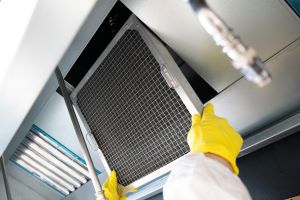
Over time, this can lead to issues that are not immediately visible.
During professional inspections, engineers frequently identify:
- Significant grease deposits inside ductwork
- Damaged or missing access panels
- Blocked or heavily contaminated filters
- Reduced airflow caused by grease accumulation
- Worn or damaged extract fan components
- Areas that cannot currently be accessed for cleaning
These issues are rarely visible during routine kitchen cleaning because they occur inside the ventilation system.
Identifying them during the summer allows schools sufficient time to arrange any necessary remedial works before kitchens return to full operation.
| If your school is already planning summer compliance works, our article “Why Schools Should Prioritise Compliance This Summer” provides further guidance on preparing educational buildings before the new academic year. |
What Documentation Should Schools Receive?
Professional kitchen extract cleaning should always be supported by clear documentation.
This provides evidence that the system has been cleaned and helps demonstrate that the school is proactively managing fire risks.
Following completion, you should typically receive:
- A detailed cleaning report
- Before and after photographs
- Evidence of grease measurements where applicable
- Recommendations for future cleaning frequencies
- A certificate confirming the work completed
- Any recommendations for repairs or remedial works
Maintaining these records can support insurance requirements, health and safety audits, internal compliance programmes and estate management records.
About the Author: Matt Saunders