Fire safety within a building relies on a combination of active and passive systems working together. While alarms and sprinklers are more visible, fire & smoke dampers are often hidden from view, quietly performing a critical role within a building’s ventilation system.
For building owners, facilities managers, and duty holders, being able to identify fire dampers is an important part of maintaining compliance and ensuring occupant safety. This article explains how to recognise fire dampers, where they are typically located, and what to look out for, following best practice and industry guidance.
What are Fire Fampers, and Why Does Identification Matter?
Fire dampers are installed within ductwork to help prevent the spread of fire and smoke between compartments of a building. They are usually positioned where ventilation ducts pass through fire-resisting walls, floors, or partitions.
Identifying fire dampers correctly is essential for several reasons. Firstly, it ensures that they can be included in routine inspection and maintenance programmes. Secondly, it helps demonstrate compliance with UK fire safety legislation, including the Regulatory Reform (Fire Safety) Order 2005 and guidance such as BS 9999:2017.
Without clear identification, dampers can easily be overlooked, which increases the risk of failure in an emergency.
Where are Fire Dampers Typically Located?
Fire dampers are not usually visible in day-to-day building use, as they are installed within ventilation systems. However, there are common areas where they are likely to be found.
These include:
- Above suspended ceilings
- Inside service risers or shafts
- Within plant rooms
- Behind access panels in walls or ceilings
- At points where ductwork passes through fire-rated barriers
In larger or more complex buildings, there may be hundreds of fire dampers installed throughout the system. This makes accurate records and clear identification even more important.
Key features to look for
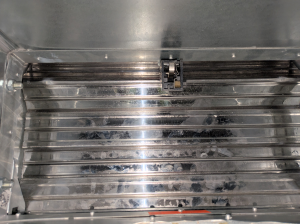
Although fire dampers are often concealed, there are several identifying features that can help you recognise them once accessed.
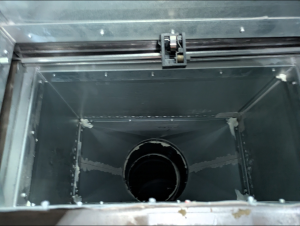
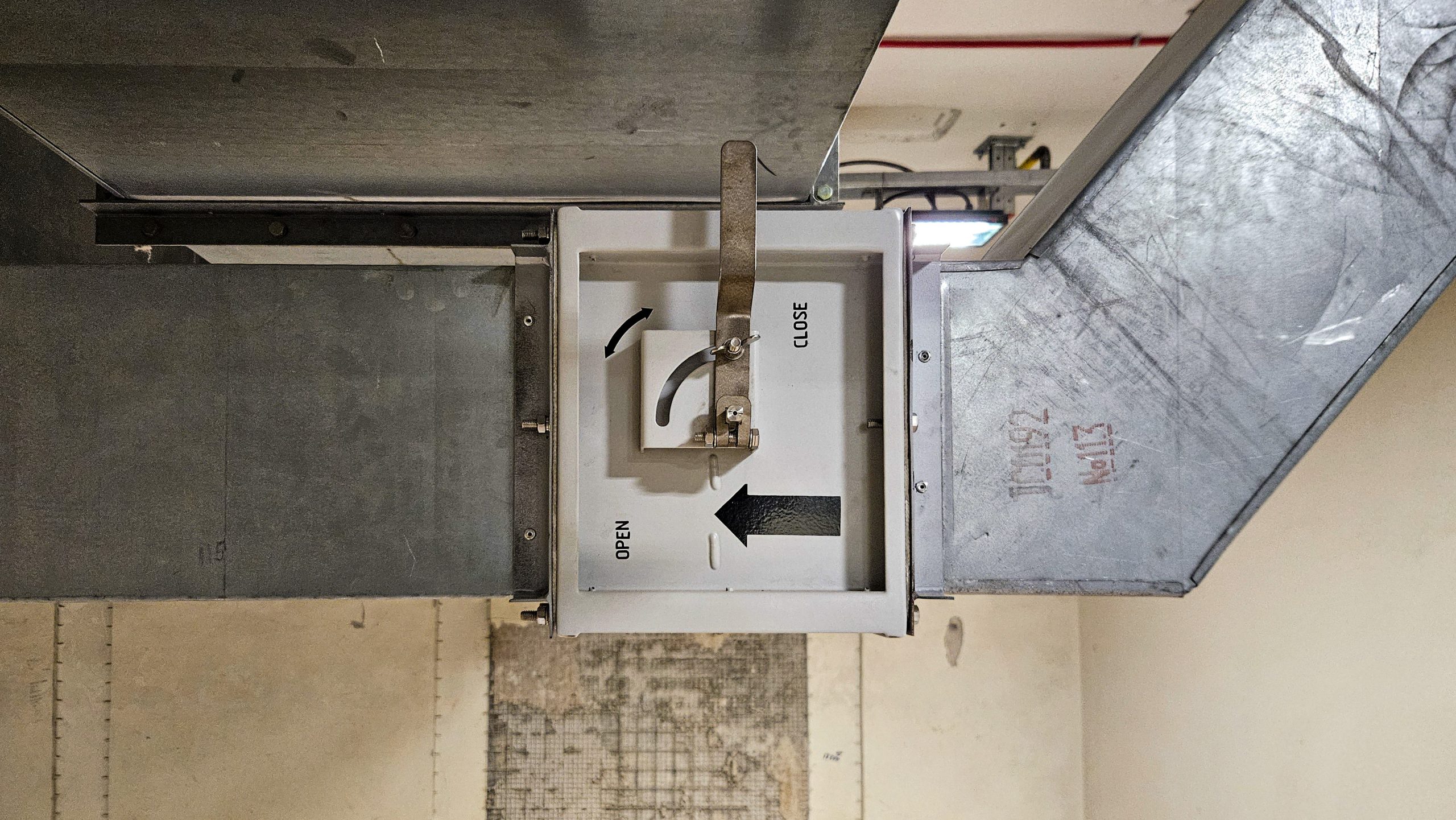
A typical fire damper will include:
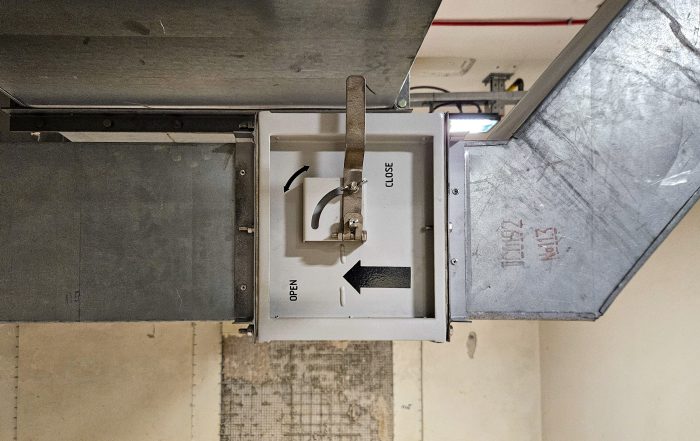
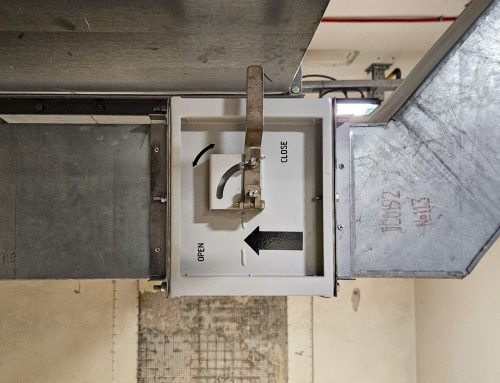
- A metal frame fitted within ductwork
- A set of blades or a curtain mechanism that closes when activated
- A fusible link designed to melt at a specific temperature
- A manual release or reset mechanism
- A data plate or label with manufacturer details
The presence of a fusible link is one of the most distinctive features of fire dampers, as it is what triggers the damper to close when exposed to heat.
The Importance of Labelling and Records
Best practice and industry standards recommend that all fire dampers are clearly labelled and recorded. Each damper should have a unique identification number, which corresponds to its location within the building.
This information is typically included in a fire damper register or asset list, as well as any follow up function testing report. The register should detail:
- The exact location of each damper
- Its type and size
- The date of last inspection
- Its current condition
Accurate records not only support ongoing maintenance but also provide a clear audit trail for compliance purposes.
Challenges in Identifying Fire Dampers
In many buildings, particularly older properties, identifying fire dampers can be more challenging. Documentation may be incomplete, and access points may not be clearly marked.
In some cases, dampers may have been installed in locations that are difficult to reach, in the wrong location or access panels may not have been provided at all. This can make inspection and maintenance more complicated.
Additionally, changes to a building over time, such as refurbishments or alterations to ductwork, can make it harder to track the original installation layout.
The Role of Competent Professionals
Given these challenges, it is often advisable to work with competent fire safety professionals when identifying fire dampers. Specialists can carry out detailed surveys, locate hidden dampers, and ensure that all units are properly recorded and accessible.
They will also be familiar with current standards and guidance, helping to ensure that your building meets its legal obligations.
Maintaining Compliance and Safety
Identifying fire and smoke dampers is not a one-off task. It forms part of a wider fire safety strategy that includes regular inspection, testing, and maintenance.
By knowing where your fire dampers are and ensuring they are clearly labelled and recorded, you can take a proactive approach to safety. This reduces the risk of overlooked equipment and helps ensure that all systems will function as intended in the event of a fire.
A Practical Step Towards Better Fire Safety
Fire & smoke dampers may not be visible in everyday building operations, but their importance should not be underestimated. Taking the time to properly identify and document them is a practical and necessary step for any responsible person.
With the right knowledge, accurate records, and support from experienced professionals, you can ensure that your building remains compliant, well-maintained, and, most importantly, safe for everyone inside.
Your Fire Damper Identification Questions Answered
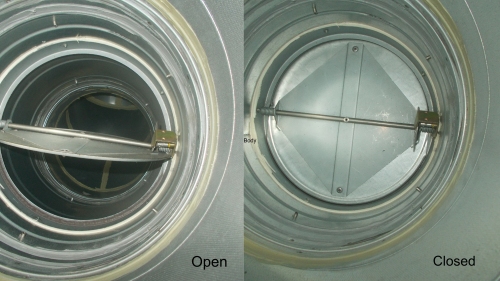
When a fire damper is in its normal operating position it will be open, allowing air to flow freely through the ductwork. When it has been activated, either by heat melting the fusible link or a signal from the fire alarm system, the blades or curtain mechanism will be in the closed position. This can only be confirmed by accessing the damper directly, which is why clearly marked access panels are essential.
A fire damper is typically a metal-framed device fitted inside a ventilation duct, containing a set of blades or a curtain mechanism designed to close when triggered. Most will also have a fusible link, a data plate with manufacturer details, and a manual reset mechanism. In practice, fire dampers are rarely visible without accessing the ductwork or ceiling void in which they are installed.
Take the Next Step Towards Fire Damper Compliance
Proper fire damper identification is the foundation of any compliant testing programme. Without it, dampers can be missed, records remain incomplete, and your building’s fire compartmentation cannot be fully verified. At Swift Fire Compliance, our experienced engineers will survey your building, locate every damper, and put the records in place you need to meet your legal obligations.
Speak to our team today to get started.
About the Author: Richard Crews