Air and Water Hygiene Services for Hospitals: Part Two
Fire safety is a vital element in maintaining hospitals, as facilities managers work hard to support the efforts of the medical teams as they undertake medical care.
Good indoor air quality is essential, and cleaner, fresher air must be brought into the hospital via clean ductwork, while staler air is expelled.
However, while ventilation ductwork serves an essential purpose, special care is needed at the points where it passes through internal fire-resistant walls, as the ventilation duct creates an opening through which fire could travel. This aperture breaches the ‘fire compartment’ which helps to contain fire and prevent its spread.
In order to close off this opening in the event of a fire and reinstate the fire compartment provided by the fire-resistant wall, fire dampers are installed.
What is a Fire Damper?
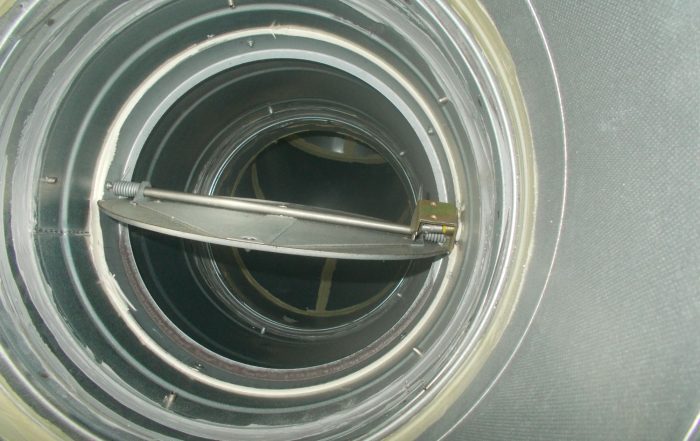
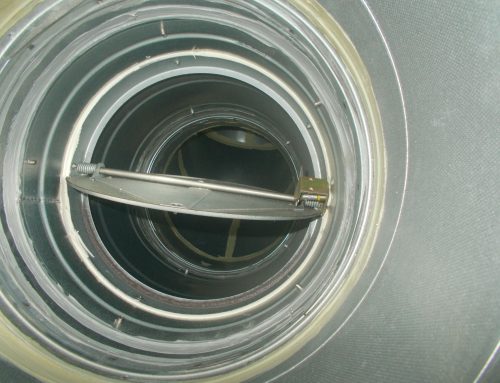
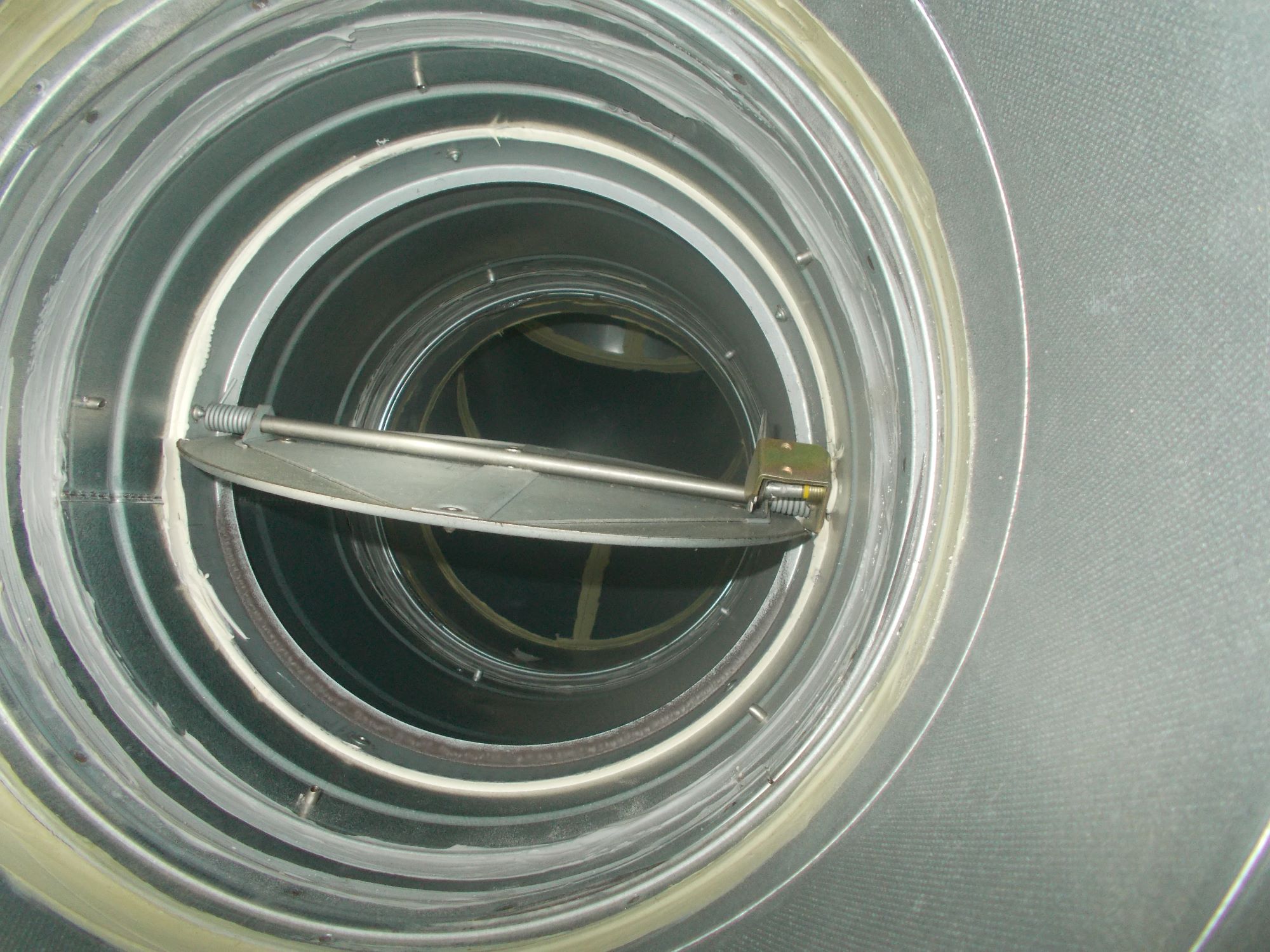
Open circular fire damper
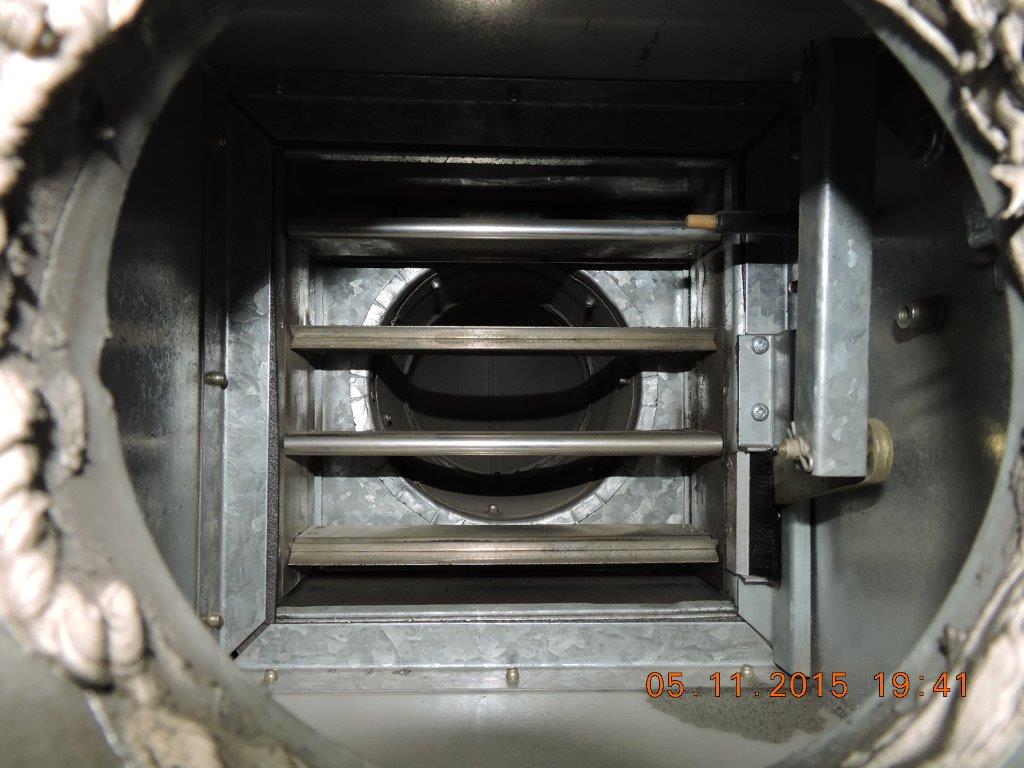
A fire damper is a safety device installed in the ductwork of a building’s heating, ventilation, and air conditioning (HVAC) system to automatically close and block the spread of fire and smoke through fire-rated walls and floors.
Fire dampers help to contain the fire, and to provide valuable additional time to evacuate a building. In a hospital, this extra time to evacuate is especially critical, as many of the occupants will be more vulnerable, and may have compromised mobility.
Well maintained and fully functioning fire dampers can, quite literally, make the difference between life and death.
For this reason, annual function testing of fire dampers is required in accordance with BS:9999, to ensure that they will close correctly in the event of a fire.
Our teams inspect, clean, function test and maintain fire dampers – and this can be a challenge in a hospital setting. We work closely with facilities managers and, occasionally, with patient care teams in real time, to ensure minimum disruption for staff and patients.
Making Fire Damper Testing Work for the Hospital

Often, one of the first tasks when working with a new client is identifying and locating the fire dampers.
Hospitals are often large sites built over a number of years and the records of fire damper locations are frequently incomplete. We work with the hospital’s own facilities management department to identify previously unrecorded units and help to update and complete their list of assets. Where units have not been recorded, tests have usually also not been documented. This can mean that accurate records of tests have not been made, or it can imply that they have not been function tested since installation.
Our first task with a hospital client is therefore to ensure that there is a full list of assets and records of cleaning and function tests so we can help them to establish a programme of ongoing testing and maintenance for the future. Hospitals may have hundreds, and sometimes thousands, of fire dampers, and all must remain compliant with BS:9999.
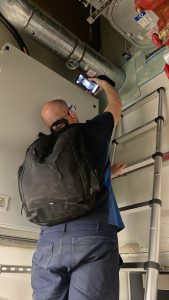
Fire Damper Testing in Busy Hospitals
Without disruption to busy hospital life, we identify, locate, test and record all fire dampers, compiling reports which provide robust evidence of function testing, and compliance with BS:9999. We may test in one area at a time, in some cases in a single side ward or private room, and we will spread work so that we test areas which run on daytime schedules overnight or at weekends.
Hospital Life Must Go On
The needs of the patients must come first, so, with careful planning, we ensure that the life of the hospital doesn’t skip a beat. Testing is carried out in phases, so small areas can be closed for the least amount of time, minimising overall downtime throughout the hospital. Our final reports are exhaustive.
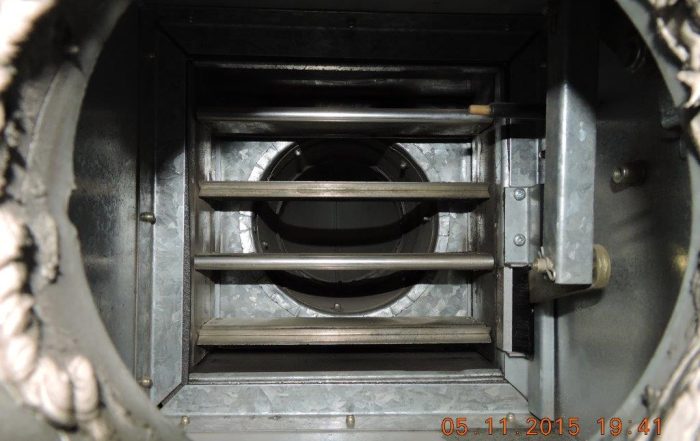
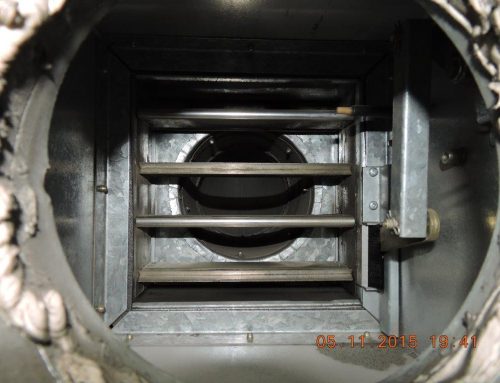
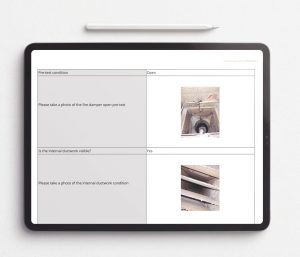 Each fire damper is recorded in detail on its own page, including photographic evidence of the actual state of the unit before and after testing.
Should a fire and smoke damper fail a compliance test, for whatever reason, the report highlights the specific reason for failure, makes suggestions for appropriate remedial action to achieve compliance, and quotes a price for the work.
The hospital estates management team is therefore provided with a complete picture of the location and state of every fire damper on their site so they can achieve compliance and establish a thorough, ongoing programme for future annual function testing and maintenance.
FAQ’s:
How often do fire dampers need to be tested in UK hospitals?
In UK hospitals, fire dampers must be function tested at least once every 12 months in accordance with BS 9999 and wider fire safety legislation. Due to the nature of healthcare environments, some areas such as operating theatres, intensive care units, plant rooms, and high-risk clinical zones may require more frequent inspection based on a site-specific fire risk assessment. Regular testing ensures dampers will close correctly during a fire, helping to maintain fire compartmentation and protect patients who may have limited mobility or require assisted evacuation.
Who holds legal responsibility for fire damper compliance in a hospital setting?
Legal responsibility sits with the Responsible Person under the Regulatory Reform (Fire Safety) Order 2005. In hospitals, this is typically the NHS Trust, supported by estates and facilities management teams. The Responsible Person must ensure all fire dampers are correctly located, accessible, tested, maintained, and supported by accurate records. Failure to demonstrate compliance can result in enforcement action, prosecution, and significant reputational and operational consequences for the Trust.
What are the risks if fire dampers are not tested or fail compliance in hospitals?
If fire dampers are not tested or fail to operate correctly, fire and smoke can spread rapidly through ventilation systems, compromising evacuation routes and clinical areas. In hospitals, this presents a serious risk to vulnerable patients, including those in wards, neonatal units, or critical care. Non-compliance may also lead to legal action, invalidated insurance claims, and intervention from enforcing authorities. Prompt identification of failures, clear remedial actions, and documented retesting are essential to maintaining patient safety and regulatory compliance.
How Swift Fire Compliance Can Support Your Hospital
While medical teams take care of the patients, we ensure that fire dampers are functionally fit, compliant, and have a very healthy future.
Check your compliance with Swift Fire Compliance or get in touch today to discuss fire damper testing and hospital compliance support.
About the Author: Richard Crews